
Modern investors are constantly looking for tools that enable them to manage risk, reduce costs, and simplify access to a variety of markets. ETF investments It has risen in popularity as a versatile solution, changing the way people build and manage their portfolios. Thanks to their unique structure, these funds provide a dynamic combination of flexibility, cost effectiveness and broad market exposure. ETFs enable investors to stay ahead of evolving financial markets while reaping the benefits of a professionally managed portfolio. The popularity of ETFs reflects not only their convenience, but also their effectiveness in meeting a variety of investor needs – whether for retirement planning, income generation, or strategic asset allocation.
Whether you’re a beginner looking for an easy entry point or an experienced investor balancing complex strategies, ETFs offer significant advantages. These instruments are accessible through regular brokerage accounts and listed on major exchanges, and are quick to buy and sell, making portfolio adjustments seamless for even the most active investors. This means that investors can quickly respond to changing market conditions, rebalance their portfolios as their financial goals evolve, or take advantage of new opportunities as they arise. Furthermore, since ETFs are traded like common stocks, the ability to place limit and stop orders expands the range of strategies available to investors, from straightforward buy-and-hold to more advanced tactical maneuvers.
diversification
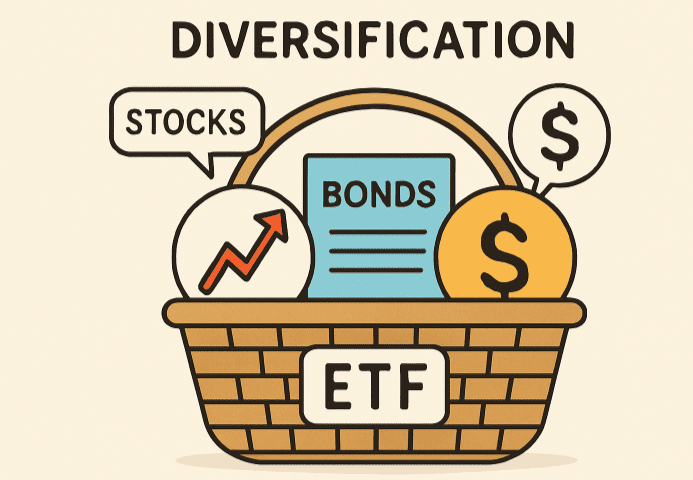
ETFs, by their nature, provide diversification by tracking indices or asset groups rather than individual securities. This approach spreads your investment over dozens or even hundreds of stocks, bonds, or commodities. For example, purchasing an ETF that tracks the S&P 500 instantly provides exposure to some of the largest and most influential U.S. companies, thus reducing reliance on the performance of a single stock. diversification It’s key to managing risk, and ETFs make it easy to implement. This means your portfolio is likely better protected from isolated declines in the value of one or two companies, as gains from booming sectors or regions can help offset losses elsewhere. In this way, ETFs serve as a practical way to pursue growth while mitigating unnecessary concentration risk.
Cost efficiency
ETFs are known for their low expense ratios, which is a huge appeal for cost-conscious investors. According to CNBC, the average ETF carries an annual management fee of 0.51%, about half the 1.01% fee of the average mutual fund. Many brokerages now offer commission-free ETF trades, lowering the cost of maintaining a diversified portfolio. Over time, lower fees can significantly increase returns, especially for long-term investors seeking to compound growth. The money you don’t pay in fees stays invested, increasing its value each year. Additionally, the passive nature of many ETFs – simply following a pre-determined index rather than relying on regular buying and selling by managers – means fewer hidden costs or trading expenses, putting more dollars to work for you.
Tax efficiency
Taxes are a major consideration for any investment vehicle. Thanks to a unique process known as creation and redemption in kind, most ETFs can reduce the frequency and impact of taxable capital gains distributions. In practice, this means that investors often pay less in taxes than they would in comparable mutual funds. Since 1993, US investors alone have saved billions in fees and taxes by choosing ETFs over other types of funds. This tax advantage can be particularly beneficial to investors in higher tax brackets or those seeking to maximize after-tax returns over the long term. While each investor’s situation is unique, the structural efficiency of ETFs provides a natural advantage when building tax-smart wealth strategies.
Transparency
Transparency provides peace of mind and deeper control, and ETFs excel by providing daily disclosure of holdings. This level of insight is rare among other pooled investment vehicles, some of which publish their holdings only quarterly. With ETFs, investors always know exactly what assets they own – helping them avoid overlap, manage sector exposure, and ensure alignment with their broader strategy. Reputable sources highlight this transparency as a key advantage. By knowing precisely where your money is allocated, you can make more informed choices about sector rotation, risk tolerance, and portfolio rebalancing—essential activities for disciplined, goal-oriented investors.





Liquidity
Unlike mutual funds, which only trade at the end of the day, ETFs can be bought and sold on exchanges throughout the trading day. This high level of liquidity is invaluable for investors who want to capitalize on market movements, quickly rebalance their portfolios, or deploy tactical allocations efficiently. The ability to enter or exit positions with minimal delay also helps reduce transaction costs and ensure timely execution based on real-time pricing. Furthermore, an active market for ETFs can contribute to tighter bid-ask spreads and better price discovery compared to stocks or thinly traded funds, allowing for an additional level of flexibility in executing investment decisions.
Flexibility
ETFs span an incredibly wide universe, ranging from major indices to specific industries, countries, commodities and currencies, and even niche sectors such as clean energy or technological innovation. This wide range of options allows investors to tailor their portfolios to suit their personal goals, risk tolerance, or market expectations. You can use bond ETFs to generate income, international funds for global diversification, or thematic funds to bet on emerging trends – all within the same brokerage account. In markets where speed and adaptability are critical, ETFs allow you to efficiently target your strategy—responding quickly to macroeconomic events, emerging trends, or changes in personal circumstances without the headache of liquidating and purchasing multiple individual securities.
accessibility
For a long time, access to specific markets or niche sectors required significant capital or complex operations. ETFs have leveled the playing field by allowing investors – even those with modest portfolios – to participate in areas such as global markets, commodities and alternative assets through the purchase of a single share. The wide selection of ETFs ensures there’s an option to suit almost every goal, whether it’s income, growth, inflation protection or ethical investing. In addition, the process has become remarkably simple – an online brokerage account can be opened in minutes, and investors can begin building an ETF-based portfolio with minimal capital, helping to democratize access to opportunities that were previously out of reach for most individuals.
Final thoughts
Incorporating ETFs into your investing approach offers a host of distinct benefits: easy diversification, attractive cost savings, superior tax efficiency, complete transparency, unparalleled liquidity, remarkable flexibility, and broad accessibility. For anyone seeking to build a comprehensive and flexible portfolio that remains adaptable in changing markets, ETFs provide an essential toolkit. By understanding these advantages, investors can better position themselves for long-term success and peace of mind. Whether you’re starting your investing journey or refining an existing approach, ETFs provide lasting value as a fundamental building block for financial growth.



