


- The Education Freedom Tax Credit will allow taxpayers to reduce up to $1,700 in federal income taxes to fund scholarships for K-12 students, starting in 2027.
- Scholarships funded through accreditation can be used to cover a wide range of educational expenses, including private school tuition, tutoring, and services for students with disabilities.
- The program is voluntary for states, and families’ access will depend largely on where they live and how their state implements the system.
US Departments of Education and Treasury Released new details about the Education Freedom Tax CreditIt is the focus of President Trump’s Working Families Tax Cuts Act.
Administration officials describe it as the largest expansion of education options yet, with the potential to direct billions of dollars toward private scholarships and educational services outside traditional public school funding sources.
Unlike previous education tax benefits that targeted families directly, this credit works by encouraging taxpayers to contribute to nonprofit scholarship-giving organizations, which then distribute the aid to eligible students.
The design is somewhat complex and confusing, will take some time to roll out, and its impact will vary sharply by state. For families, the key question is not whether credit exists, but whether and how it will be available where they live.
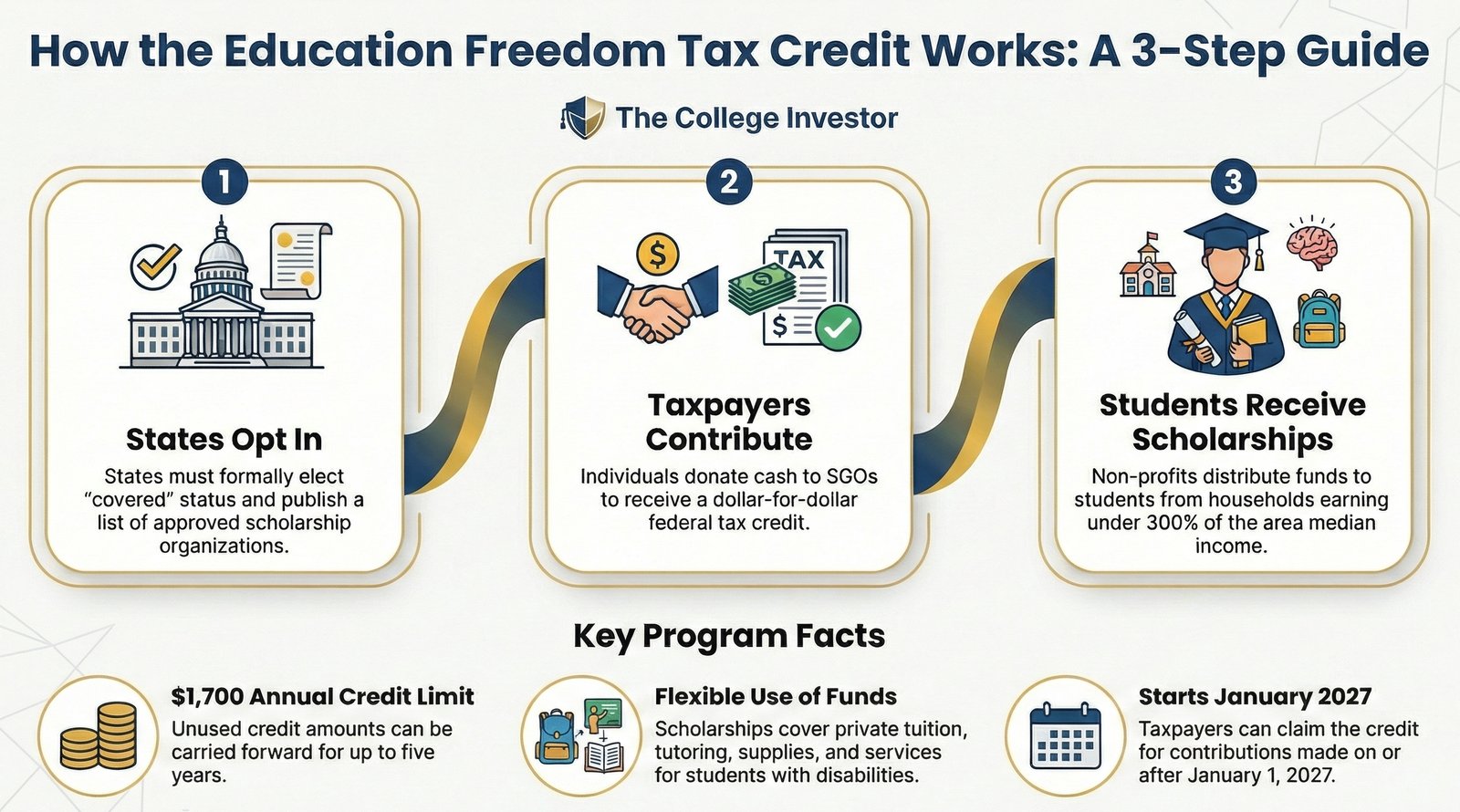
How does the Education Freedom Tax Credit work?
In essence, the Education Freedom Tax Credit allows individuals to claim a federal tax credit of up to $1,700 for cash contributions made to approved scholarship-giving organizations, or SGOs. A tax credit reduces your federal income tax liability on the dollar, making it more valuable than a tax credit that only reduces your taxable income.
These SGOs are non-profit organizations that must use at least 90% of their funds for K-12 educational scholarships. These scholarships can be applied to a wide range of education expenses associated with public, private, or charter schools. Examples include private school tuition, tutoring services, classroom supplies, vocational training equipment, and support services for students with disabilities.




The program is structured as a three-step pipeline: participating states choose, taxpayers contribute, and students receive scholarships. Countries that choose to participate must formally elect to become “covered countries” and publish an annual list of eligible small organizations. Taxpayers then donate to one of those organizations and claim the credit when they file their federal tax returns.
If a taxpayer cannot use the full $1,700 credit in one year, any unused portion can be carried forward for up to five years. Any U.S. citizen or resident can claim the tax credit if they make a qualifying cash contribution to an SGO listed in one of the participating countries. There are no income limits for donors.
Who can get the scholarship?
To receive the scholarship, students must meet income and enrollment criteria. Eligible students must be eligible to enroll in a public elementary or secondary school and belong to families with income no more than 300% of the area’s median gross income. This threshold is relatively high in many regions, meaning that most middle-income families in participating countries can qualify.
Maximum scholarship amounts are limited to $1,700. While donors are limited to this credit amount, small community organizations can pool funds and award larger scholarships based on their mission and the needs of the students they serve.
What are the participating countries?
The administration says that as of the latest announcement, 23 states have elected to take advantage of the Education Freedom Tax Credit, including:
- Alabama
- Alaska
- Arkansas
- Georgia
- Idaho
- Indiana
- yeah
- Louisiana
- Mississippi
- Missouri
- Montana
- nebraska
- Nevada
- North Dakota
- Ohio
- Oklahoma
- South Carolina
- South Dakota
- Tennessee
- Texas
- Virginia
- West Virginia
- Wyoming
Unfortunately, state participation is voluntary and unequal, and families will not be able to receive scholarships unless their state completes the participation process and approves CSOs.
Taxpayers will not be able to claim the credit until they file returns for contributions made on or after January 1, 2027. The Treasury Department and the IRS are still drafting the implementing rules, following a public comment request issued in December 2025.
What does this mean for families?
For families in participating states, the program can expand access to educational services that have historically been out of reach. The administration estimates that the credit could generate up to $24 billion in education funding annually if used widely, with each $1 billion in scholarships potentially supporting tuition for about 77,000 students or tutoring for more than 300,000 students.
How this translates into real assistance will depend on local circumstances. In states with existing waiting lists for tutoring programs or scholarships, SME funding can reduce backlogs. In other cases, scholarships may flow primarily toward private school tuition or enrichment services.
The flexibility of allowable expenses means that families can tailor support to their children’s needs, whether that means after-school tutoring, specialized disability services, or career-focused programs at the high school level. The administration emphasizes that scholarships can supplement public education rather than replace it, especially for students who remain enrolled in public schools but require additional services.
What comes next?
The Education Freedom Tax Credit is not an immediate relief. Families and donors will have to wait until 2027 to start making qualifying contributions, and countries must complete administrative steps well before then to ensure SSOs are approved.
At the moment, the most important actions are informational. Families can monitor whether their state chooses it, track which small organizations have been approved, and evaluate whether their family income falls within eligibility limits. Taxpayers interested in claiming the credit will need to plan charitable contributions strategically once the IRS guidance is finalized.
The Treasury Department said additional rules and instructions will be issued to taxpayers, charities and states this year.
Don’t miss these other stories:



