
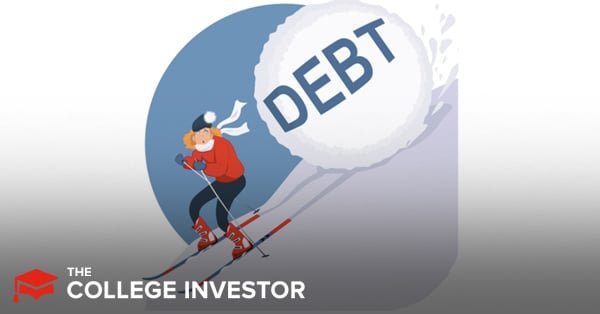

Debt snowball and debt avalanche are two of the most common ways to pay off debt.
When you first start paying off debt, the most important thing is to have a plan. Without a plan, paying off debt can seem like a daunting task, which will quickly dissipate any motivation you have to actually pay off debt.
Having a plan can help you realize that debt is not forever and that it is possible to be debt-free. Often times, debt feels like a life sentence, but it doesn’t have to be.
As you explore the different types of debt repayment plans, the debt snowball versus debt avalanche debate is bound to come up. Each side of the discussion makes strong points for its preferred debt repayment strategy. But what is the best way to pay off debt? Let’s take a closer look at how these two strategies compare.
The debt snowball method
The debt snowball method is a plan to attack your debt with the smallest balance first. So, if you have credit cards, student loans, and a car loan, the first step would be to list all of your remaining balances. Determine the outstanding loan balance is the smallest and focus on it first.





When you choose to focus on the smallest balance, you’ll spend any extra money you have to pay off debt against that loan each month. As for the rest of your outstanding loans, you can stick to paying the minimum while aggressively attacking the smallest balance.
Once you pay off the smallest loan, you can move on to the next smallest. When you move up to the next smallest loan, you’ll be able to use any available funds you have to pay off debt in addition to the minimum payment on the loan you just canceled. Thus, the snowball you used to address your debt will continue to grow.
Advantages of the snowball method
If you have a lot of debt on your books, it can be difficult to know what to address first. The snowball method allows you to focus on one small debt at a time. Instead of feeling overwhelmed by the overwhelming amount of debt you need to pay off, you can focus on one achievable task at a time.
When you eliminate your small debts, you can enjoy the feeling of completely erasing one debt from your life. The festive feeling can provide the motivation you need to keep paying off one small debt at a time. Half the battle of paying off debt is the motivation to do so. The snowball method is great if you’re looking for an extra boost of motivation.
Disadvantages of the snowball method
The main drawback of the snowball method is that you will likely pay more in interest on your debt repayment journey. When you focus on the smallest debts first, you’re not necessarily using your money in the most efficient way.
Although you’ll likely pay more in interest, the incentive boost provided by the snowball method may be worth it if you need the small wins along the way.
Debt collapse method
The other option is the avalanche method, which focuses on the highest interest rate first. When you use the avalanche method, you’ll look at all of your outstanding balances to see which ones have the highest interest rate attached.
You will start repaying the loan with the highest interest rate. From there, you’ll continue to allocate any money you have available to pay down debt until the next highest interest rate.
Depending on what outstanding loans you have on the books, you may have to start with a large outstanding loan balance. With that said, it may take some time to see a big win in eliminating the entire debt. But mathematically, you’ll be on the right track to getting rid of your debt in the most efficient way possible.
Advantages of the avalanche method
Debt avalanche is the mathematically best way to pay off your debts. The numbers behind the avalanche method ensure that you’ll never pay more than you have to when you cancel your debt.
If you follow your plan without fail, you’ll pay less and less interest overall as your debt avalanches. In other words, you’ll be on the quicker (and cheaper) path to getting out of debt.
Disadvantages of the avalanche method
Although the mathematics behind the avalanche method are tempting, it can be difficult to stay the course. Without small wins along the way, you may not have the motivation you need to stick to your new payment plan.
Also, we should note that for most people, the mathematical difference between the two is likely only a few hundred to a few thousand dollars. Over the years, this will not cause the pendulum to suddenly swing toward wealth.
Debt Snowball vs. Debt Collapse: Which is Better?
In personal finance, almost everyone has an opinion about the best way to pay off debt. But the real question is which is the best way? You.
The snowball method’s quick successes often make it a more sustainable option for people. But if you’re a numbers-oriented person, progress using the avalanche method may be a better fit. With the right internal motivation, you may not need the small wins provided by the snowball method to stay the course.
Ultimately, what’s best for you is what helps you sleep better at night. This may sound strange, but debt can affect your financial mindset, motivation, and self-esteem.
It’s okay to change things up a little. You can create a hybrid method to pay off some small balances, then focus on larger payments. You can save a bunch of money and then make one payment.
Final thoughts
When it comes to choosing between a debt snowball versus a debt avalanche, do whatever makes sense for you. No matter which method you choose, the most important thing is to get started.
It can be easy to fall into analysis paralysis and think that you have to pay off your debts the “right” way. Do it your way. But most importantly, just do it.
Momentum leads to motivation which often leads to more momentum. This is a powerful cycle that can produce amazing results. With the right debt payment plan for you, you’ll be debt-free one day soon!



