

- Beginning in July 2026, a new federal law will limit the amount graduate students can borrow, ending the long-standing ability to finance the full cost of attendance through federal loans.
- Nearly one in three recent graduate borrowers have exceeded the new limits under current borrowing patterns, according to a new Federal Reserve analysis.
- Nearly 40% of these borrowers with high balances may have difficulty qualifying for private loans without a co-signer, raising concerns about access to higher education.
When Congress passed the Big Beautiful Bill, it changed a central feature of how higher education in the United States was financed. For nearly two decades, federal policy has allowed graduate students to borrow up to their full cost of attendance through the Graduate PLUS loan program. This option will expire in June 2026.
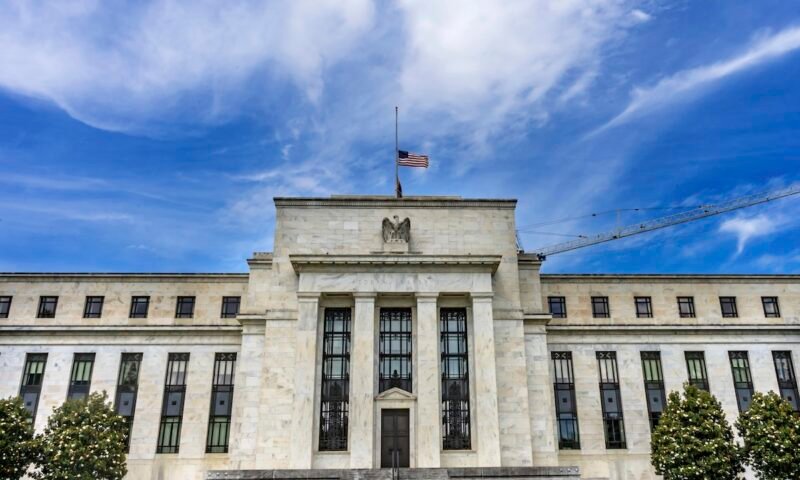
new A report issued by the Consumer Finance Institute of the Federal Reserve Bank of Philadelphia (PDF) provides one of the clearest pictures yet of what this change could mean for students, families, and lenders.
The analysis concludes that millions of future graduate students may face a new funding gap — and that private lenders may not be ready or willing to fill this gap.
Changes in federal lending for graduate students
Under the new law, graduate students will be limited to: $20,500 per year and $100,000 total In federal loans. Students in professional programs such as law and medicine will have higher limits ($50,000 annually and $200,000 in total) But even these caps are far less than what many borrowers currently afford.
There is also a debate about what is considered graduate school versus vocational school.
Using anonymized data from a credit bureau matched to graduate enrollment records, the researchers examined borrowing patterns among students who entered graduate school between 2015 and 2024. The results indicate that the new caps will be required by a large share of borrowers if previous trends continue.



on 28 percent of all federal graduate borrowers Borrowed more than the new annual limits. For professional degree programmes, the share was even higher: more than One-third of federal borrowers Go beyond what will soon be allowed. Doctoral programs also showed almost as high exposure Four out of ten borrowers Crossing new boundaries.
Even in Master’s programs (where borrowing is usually less due to shorter programmes) approx One in four federal borrowers It would have needed additional funding beyond the new caps.
How big is the financing gap?
For the students who have reached the new frontier, the gap is not trivial. The report estimates that borrowers who exceed the limits will need, on average, approx $21,700 per year In supplementary funding to continue their programs.
This number varies according to the type of institution and academic degree. Master’s students at public institutions will need approx $15,500 annuallywhile those at private, non-profit schools will face closer to… $23,600. In doctoral and professional programs, the average gaps often exceed $25,000 annuallyEspecially in private non-profit institutions.
The size of these gaps matters because federal student loans come with fixed interest rates, income-driven repayment options, and student loan forgiveness programs. This is especially important in fields such as education, social work and health sciences. Replacing federal dollars with private student loans could significantly increase costs and financial risks for students.
Private loans are not a simple alternative
One of the key questions the report asks is whether private lenders can realistically intervene. Historically, they have played only a limited role in funding higher education while students are still enrolled. Our own conversations with private lenders have highlighted that overall, no – private lenders will not be able to fill the full gap.
Among the graduate students who studied, 43 percent used federal loansBut just 4% relied on private loans During registration. Even among those who borrowed privately, most did so with a co-signer. more than Half of the borrowers are private He had someone else backing their loan.
Credit profiles help explain why. on 38% of graduate students Those in the sample either had no credit score or had a score below 670 — a common threshold for qualifying for private student loans without cosigning. almost 13 percent It also met the federal government’s “negative credit history” standard, which private lenders generally view as a minimum screen rather than a target.
These patterns become even more troubling among students who borrowed above the new federal limits. almost Four out of ten of these borrowers have high balance They had poor or missing credit histories, making it unlikely that they would qualify for private loans on their own.
In for-profit organizations, the risk is more pronounced. Although fewer students at those schools borrowed above the caps, that did not happen 60% of those who did so He had high-risk or non-existent credit scores.
What does this mean for future graduate students
For students planning to attend graduate school after 2026, the report’s findings point to several immediate facts.
First, many students who previously relied entirely on federal loans will need to obtain additional funding well before enrolling. That might mean improving credit scores, securing a co-signer, or reconsidering programs altogether.
Second, private loans for graduate school (if available for your program) will likely come in handy. Higher interest rates and fewer protection measures of federal loans. Students facing income fluctuations after graduation may find it difficult to manage these conditions.
Third, access concerns may be more acute for students from less advantaged backgrounds, those with limited credit histories, and those whose families cannot provide financial support.
The report warns that these students could be disproportionately deterred from higher education if funding options are reduced.
Don’t miss these other stories:



