


When you start thinking about your money, the main place to start is with organization. It is essential to get your finances in order so that you can make informed decisions about your “financial next steps.”
Over the years, I have tried everything possible to organize my money. I’m talking about keeping track of all my accounts, paper statements, insurance documents, bills, wills, old tax returns, work documents, and more. The amount of “stuff” I need to keep seems to increase every year. As such, I became a professional in financial institutions.
Today, I’m going to show you how I organize my financial life, and you can too. I divide it into three sections:
- Keep your financial accounts organized
- Track your live documents (such as invoices)
- Organize the things you should keep
Let’s get started.
Keep your financial accounts organized
The first step to organizing your financial life is to simply list your financial accounts. There are three ways to do this – the simple spreadsheet or list method, the software method, and the online method.
When you’re starting out, you need to think about setting a budget for your character. This means using tools (like technology or not) that fit your personality.





But before you start, you just need to list what you have. You must account for all of the following for accounts that have a cash value. Here’s the key – these are accounts that are worth money, not insurance or other financial “stuff.”
Banking services
- Verification
- Savings
- Certificates of deposit
- Money market
religion
- Credit cards
- Car loan
- Mortgage loan
- Personal loans
- Student loans
Investments
- Mediation
- Peer-to-peer lending
Retirement
Once you’ve listed all of these accounts, it’s time to organize them so you can always know your balance and any transactions taking place. The three ways to do this are pretty straightforward:
Spreadsheet or list method
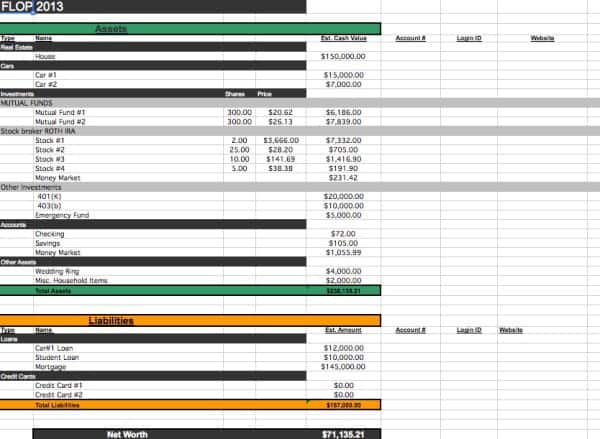
This is the traditional way of keeping track of everything. You basically keep a spreadsheet or list of all your accounts, and update it manually each month as you pay your bills.
This method requires more effort than any other method, and it is difficult to get real-time data unless you are online and checking your accounts. Most people using this method rely on paper data and reconcile it as it arrives.
One of the best spreadsheets I’ve found is called My Financial Life on One Page (FLOP). It’s a free download, so check it out.
Programmatic method
This has been the cornerstone of financial organization for the past 10 years – using software to keep track of all your accounts. The most common software for this is Quicken, which I use myself (just don’t get Quicken for Mac).
However, there are alternatives, such as iBank (which works for Mac).
The great thing about the software method is that you can update all your accounts automatically, relieving a lot of the manual work required. First, you take your list of accounts (which you created previously), and enter it into the program. Then, you connect it to the online service using your online name and password. From now on, you can use software (such as Quicken) to automatically download recent transactions and update your account balances. Finally, these software tools have more reports and tools that can help you monitor your finances easier than using a basic spreadsheet.

Related to: The most popular money and budget applications
Online method
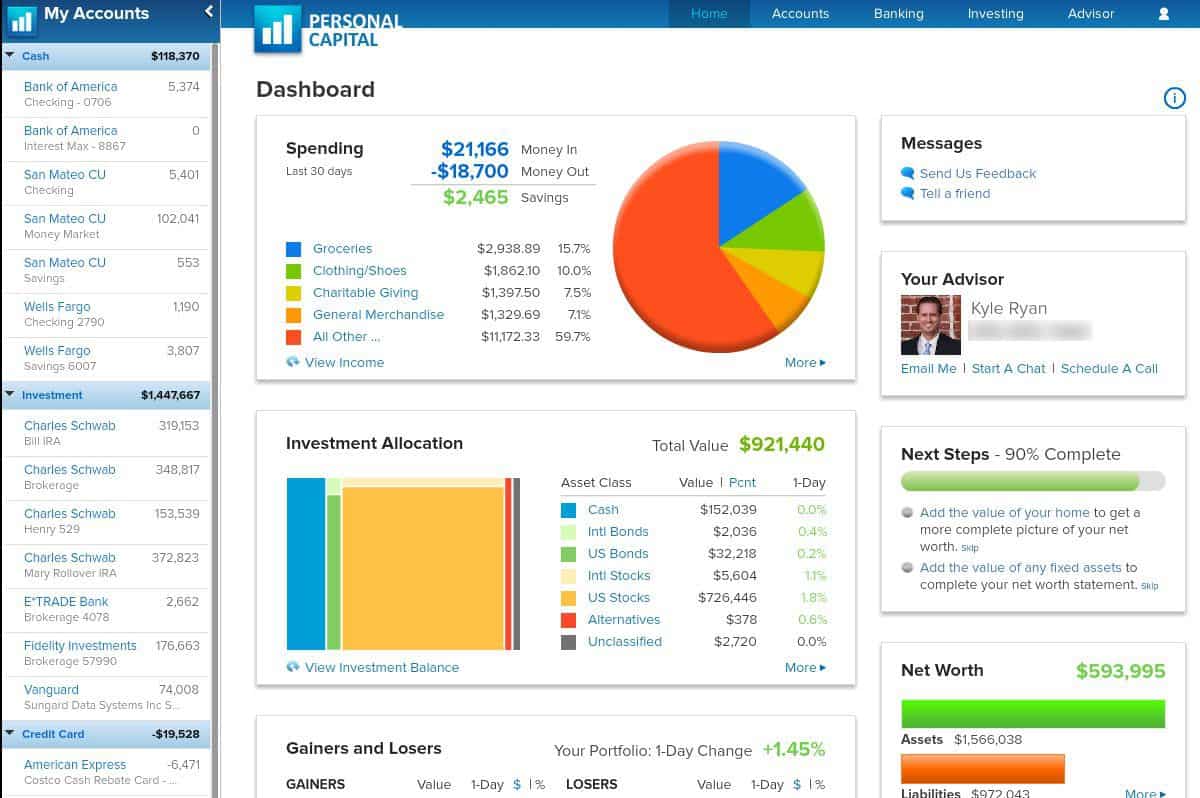
Over the past five years, online services that help you keep track of your accounts have become very popular. Check out our list of the best quick alternatives.
These services work just like Quicken, except they’re online, which they are free! Once you add your accounts, these services will update your balances and make recommendations on how to save — which is how you can make money (through services and ads).
Keep track of your invoices and other documents
Okay, now that you have all of your account balances in one place, what do you do with all that financial mail you’re receiving? You know, bills, medical statements, and more? Some you need to deal with now, others you just need to file for later.
This is all about having order. For our family, the system is very simple: We have an inbox on our desk that we clear on Friday nights as soon as the baby goes to bed.
Here’s what our looks like:
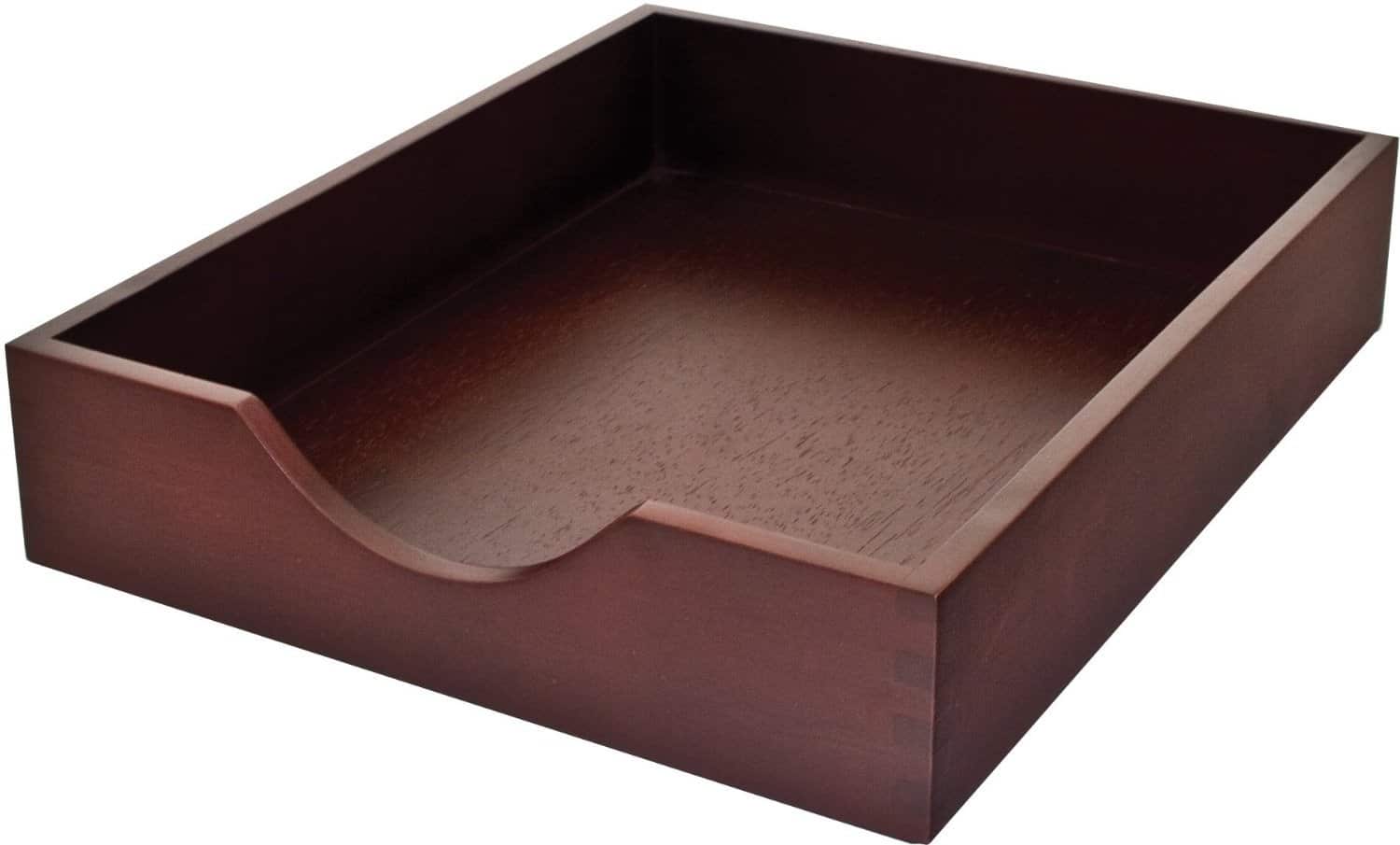
The goal is to make sure his inbox is cleared every week. You You must take action on these documents.
Sometimes the procedure is very easy, just pay the bill. I prefer to use BillPay online to send all my payments, so we usually have Quicken and our bank website open on the computer while we pay our bills.
Once we clear the inbox, we save the data and throw it in the trash. We also now digitally scan all our files to avoid saving what we don’t need.
But how do we present the data?
Manage your financial files
This is the final part of the financial organization equation – managing your financial files. Throughout the year, you may create many documents and it is important to stay organized. You’ll typically have: a monthly statement for each account listed above, a monthly bill for each utility you have, copies of your tax return, insurance statements, and more.
Some of these items you can throw away after a short period of time. Most bills you can throw away after a year. However, there are some items that need to be kept for a long time. For example, the IRS recommends keeping your tax returns for at least three years, but it really makes sense to keep them forever.
To make things easier for myself, I use the main file system:
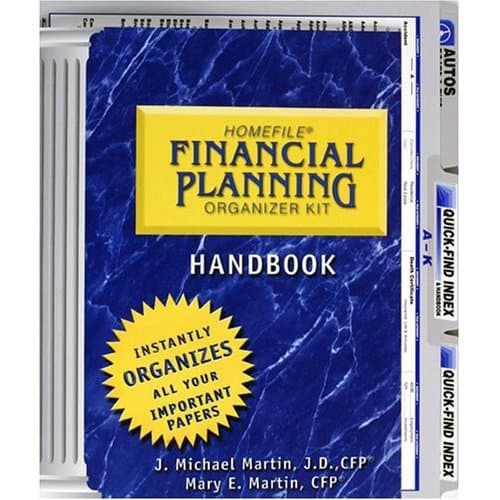
As you can see, the system provides tabs for all the major categories you’ll need to keep, along with instructions on what should go in, and a quick search index up front.
Within each tab, you can create a manila folder for each individual account. For example, one of the first tabs is in Automatic, and you can see the Manila folder for one of our cars – Honda Civic. Within each tab, you can keep a copy of your registration, insurance and any service records. This way, everything you need for resale or swap is kept in one place.
The same goes for banking, investment files, and even pay slips from your “employment” (which you can see about in the middle of the picture).
I then made it a habit, once a year in January, to get rid of any old items I no longer needed. This is the best way I’ve found to stay financially organized.
What systems and tools do you use to stay financially organized?



